Trade me
Improving their Product’s Ways of Working
Duration
October 2022 to April 2023
Project
A New Zealand based product transformation project
Focus
Product maturity assessment, product discovery, lean experimentation

Trade Me, New Zealand’s top online marketplace and classified business, joined forces with Thoughtworks to elevate their product delivery approach. Our collaboration focused on evaluating their product maturity, pinpointing improvement opportunities, and enhancing Trade Me’s overall product development processes, ensuring their continued leadership in the market.
I focussed on evaluating how product design were integrated to their product development cycle and contributed to recommending changes such as integrating more experimentations during product discovery and highlighting
the importance of learning from customer as they continue to enhance their product.
MY ROLE
Product & Design consultant
TEAM
Thoughtworks team of 4
- 2 x Product management SMEs
- 1 x Product and design consultant
The ask from Trade Me
How might Trade Me reshape their product delivery approach and enrich their customer knowledge to better support many customer segments to maintain their position as No. 1 consumer preference in New Zealand?
How did my team and I approach this?
Stage 1: Assessing their product organisation maturity
Using a Thoughtwork’s product organisation assessment model to identify Trade Me’s maturity as a product organisation in order to create the baseline for the team to identify key improvement opportunities to uplift their product practices.
Stage 2: Sharing new practices to their product delivery teams
Incrementally introducing the proposed improvement opportunities through sharing of practices relevant to work in-flight, 1:1 coaching and creating interactive workshops to the product related teams to ensure better transition to new product practices.
Stage 3 : Setting them up for success
Setting up the right communication channels and plan to scale to the wider Trade Me functions by identifying champions within Trade Me, creating a community of product practice and transferring knowledge to the product practice lead.
Stage 1: Assessing their product organisation maturity
Utilising Thoughtwork’s product org maturity model
We used this product organisation assessment model to assess organisation state and future aspiration state across 6 areas with 5 level of maturity level.
The maturity score of the different areas will allow us to see Trade Me’s product space holistically as we will be able to understand the team structures, processes, practices and culture that help their teams deliver value to their customers and achieve the business objectives.
User Centred
Value Driven
Rapid Response
Continuous Growth
Communication & Collaboration
Steering & Governance
Conducting 40 interviews across different functions
As a collaborative team, we devised varied interview methodologies and scripts tailored to different functions and seniority levels. Our primary goals were to gather comprehensive feedback across various dimensions of the model and establish a secure environment for obtaining candid input from Trade Me’s employees involved in product-related roles.
Our interviews encompassed a diverse range of roles, including product managers, product designers, UX researchers, developers, delivery leads, and senior product and technology leaders across various product streams.
Synthesising on the data and identifying the change opportunities
Data synthesis & analysis
It was essential to synthesise and analyse the collected data in different ways as the team and I wanted to validate whether the scorings of each dimensions were aligned with the summarised key observations.
Quantitative data
Scoring analysis was used to demonstrate from a scale to 1-5 where they were on each dimensions.
vs
Qualitative data
Extracted key observations from all participants for each dimensions and affinity mapped the key themes from each dimensions.
Example of key observations
User centred were their strongest category with good practices in customer interaction and research, however less in segmentation and experience modelling
Continuous Growth needed the most improvement where there was limited practices of having a continuous approach on utilising metrics outcomes and a need to have be closer to marketing for acquisition and engagement with customers
Strong examples for most areas of practicing successful product delivery and the key to success is “How might Trade Me replicate strong examples across the business and do this quickly?”
Identifying the 6 change opportunity spaces
My team and I worked with representatives from different functions to confirm the important findings from the assessment. During these workshops, we wanted participants to be aligned with what it means to be successful as a product led company and then were given the opportunity to share their ideas for improving product practices. We then sifted through these ideas, challenging participants to assess the priority and feasibility of each change based on factors such as time and effort. The goal was to identify and prioritize key change activities that would be feasible and beneficial for Trade Me to implement.

After the workshops, we were able to define 6 distinctive areas of opportunity spaces that is essential for Trade Me to act on in order to reshape their product delivery practices and maintain their position as No.1 customer preference for online marketplace and classified in New Zealand.
Learning from customers
Experimentation culture
Consistent strategy, communicated and understood
Effective planning
Lean decision making and stakeholder communication
Cross-functional synergies
Stage 2 & 3: Sharing and scaling new practices to their product delivery teams
How did we embed new practices?
Step 1: Adopt and Adapt
Start now, stay small and focussed. We worked with a specific focus team where we observed their ways of working and identify specific practices to sure
Step 2: Modify and Maintain
Over time, it is natural to identify client-specific challenges and it’s ok to modify practices in place – not everything is one size fits all.
Step 3: Amplify
Scaling new practices across the organisation – Having to refined the practices with smaller groups, we can now cross pollinate.
Defining what success meant to them…
1.
Improve our customer value mindset
- Improvement in lead quality and quantity
- Increase in number and length of user sessions
2.
Increase experimentation
- Decreased set-up time for experimentation
- Number of learning from experiments shared across Trade Me has increased
3.
Improve lean product discovery practices
- Quicker cycle time to learn through discovery
- Number of ideas validated
4.
Effective team collaboration
- Alignment score changes XX in Officevibes
- Improve better stakeholder engagements
What I focused on …
During the trailing stage, I collaborated with a Motor Team and Property team to define better approaches for:
- Experimentation Culture
- The problem to solve was “What are the smallest and leanest pathways to experiment a product idea?”
- Learning from customers
- The problem to solve was “How can Trade Me use more effective ways to be closer to their customers? “
Embedding Experimentation into Product Discovery
Step 1: Adopt and Adapt
Rolling out an experimentation guideline
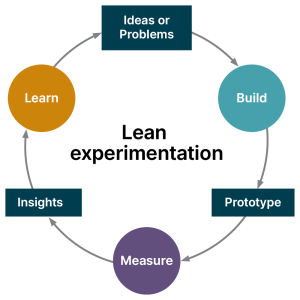
During the first trail period, I partnered up with a teammate to identify the baseline on what Trade Me needed the most in improvement when it came to experimentation. We began on collecting observations from attending a variety of team cadences from 2 product delivery team and collaborated with different product managers and product designers on identifying what experimentation practices they wanted to improve on. This allowed us to then produce a guideline that was catered to Trade Me’s product environment on explaining lean experimentation.
This guideline consisted of 4 key areas:
1. Defining the purpose of experiments
2. Identifying how to have small experiments
3. Utilising the leanest method for an experiment
4. Managing customers for production experiment
Embedding into a team
I collaborated with one of the Motor’s product delivery teams to implement the methods outlined in the Experimentation Guideline. Working closely with the Product Manager and Product Designer was crucial, as they played pivotal roles in influencing their delivery team and peers to embrace and integrate these new methods.
Our collaboration with the Product Manager and Product Designer involved several key aspects:
1. Established a secure space for individual consultations, which allowed us to provide guidance and feedback tailored to their expertise in experimentation and discovery.
2. Fostered collaboration between the Product Manager and Product Designer by emphasising the commonalities of their roles and highlighting the significance of effective communication between them.
3. Co-designed product discovery workshops that centred around a customer problem relevant to the team, aligning the methods with practical applications.
4. Co-facilitated these workshops with the team, ensuring that the Product Manager and Product Designer felt empowered to influence the adoption of new experimentation practices. The aim was to promote continuous learning through a collaborative teaching approach.
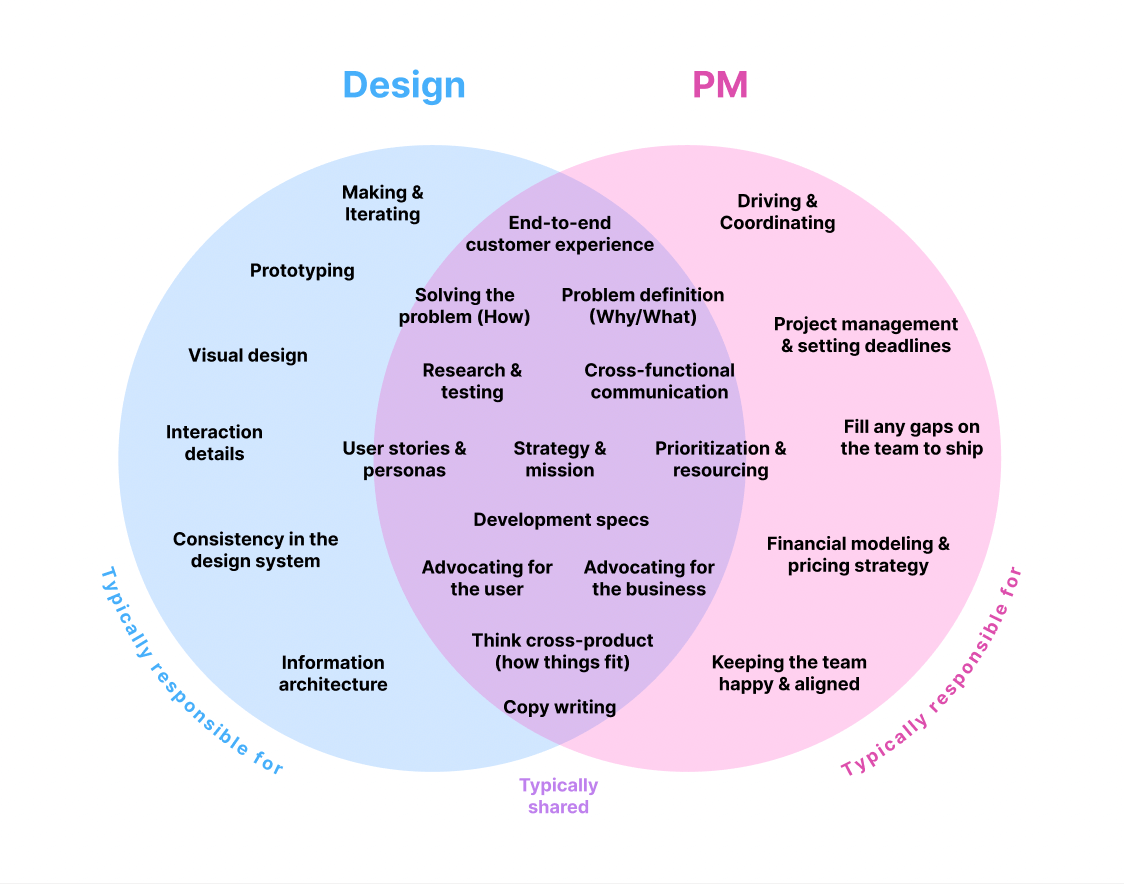
Image credit: Noah Levin
Creating and conducting a product discovery and experimentation workshop
Co-faciliated workshops with the product manager to guide the to define the most apparent customer problems to solve, identify a solution concept to explore and plan out small experiments that were achievable with their timeline.
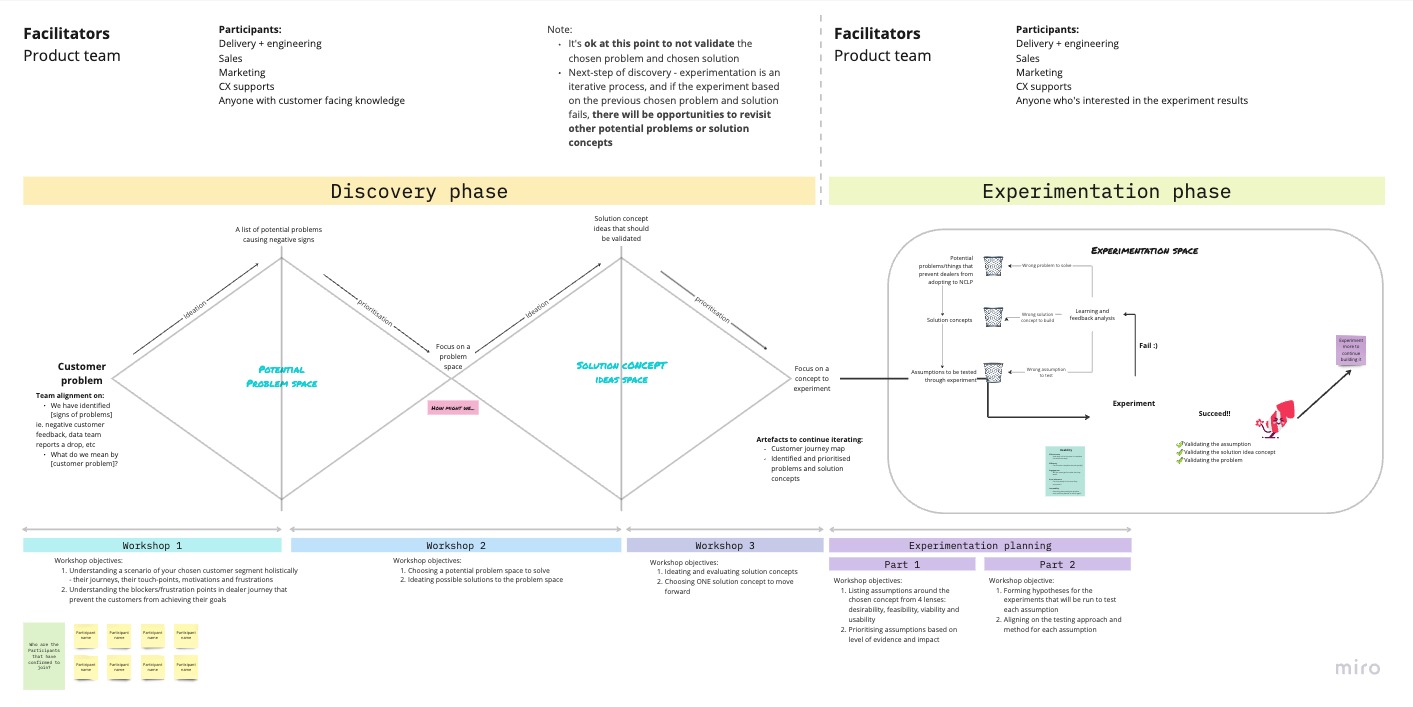
Our objectives were:
1) Introducing the team with the right techniques and methods to during the problem discovery phase to understand the customer problem and prioritising solution ideas
- Workshop 1: Defining the customer problem space through the customer journey mapping
- Workshop 2: Focusing on a problem space through breaking down into root causes and prioritising what we can solve now
- Workshop 3: Exploring how we can solve the problem through rapid ideation for solution ideas
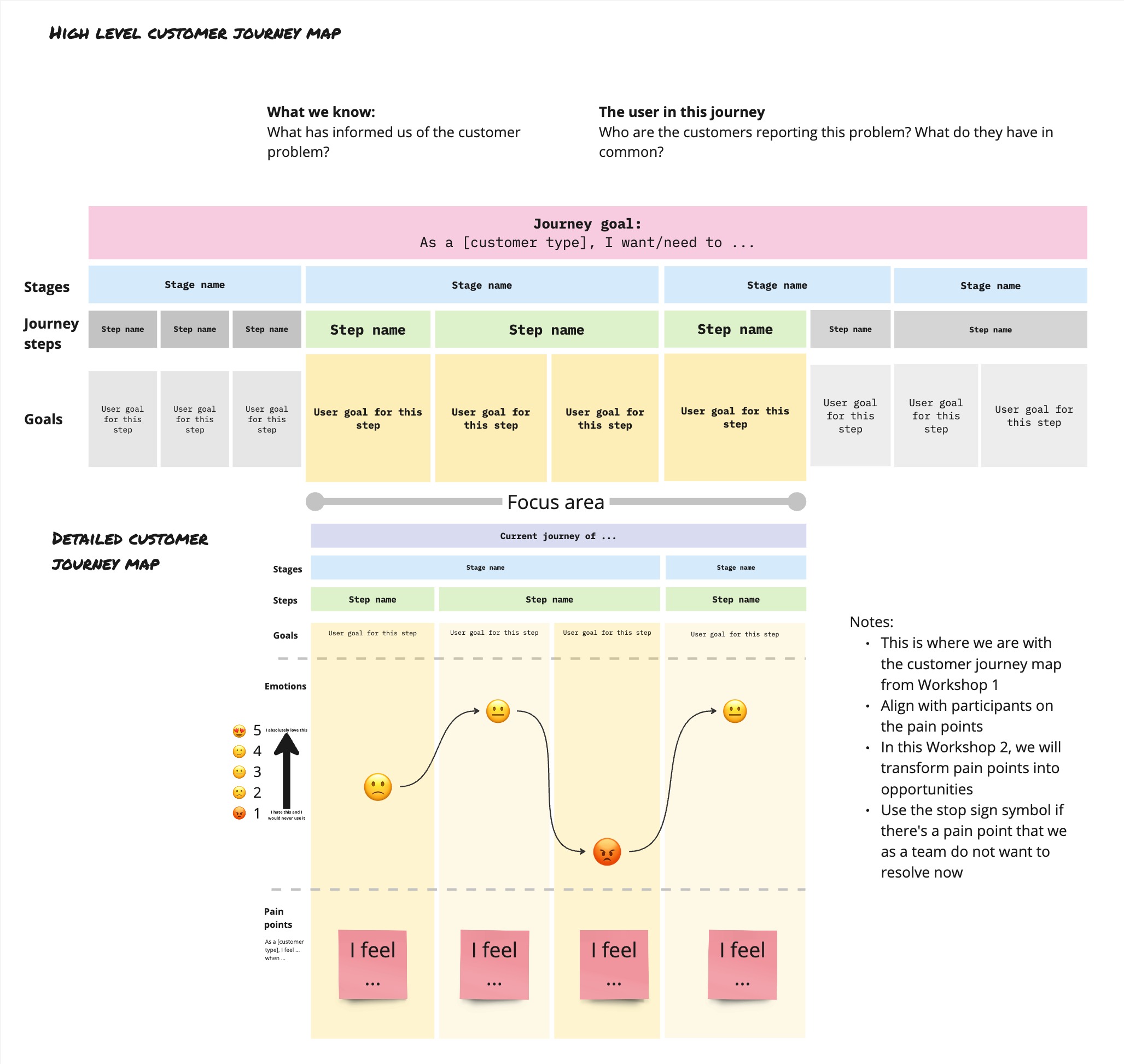
2) Integrating experimentation planning phase into their discovery process
- Workshop 1: Probing for assumptions and prioritising based on risk and impact
- Workshop 2: Writing hypotheses and choosing experiment methods
Step 2: Modify and Maintain
Ongoing support
As the motor team were ready to conduct their experiments, we continued to assist them on the preparations of the experiments and provided advices on the methods chosen.
Trialling with another team
I was able to embed into the Property team to continue expanding the methods behind experimentation planning and iterate on the approach to experimentations.
Creating a plan to scale
We began to collaborate with product leadership on ideating ways to spread the new practice of experimentation to the wider team
Step 3: Amplify
Connecting people
As more and more teams heard about the new practices of experimentation, we connected with other teams to demonstrate the new techniques and at the same time collected existing good practice of experimentation.
Hosting lunch and learn sessions
Using our learnings with initial focus teams, we then designed and facilitated lunch and learn sessions to spread the new techniques and allowed the focus teams to share their journey to the wider organisation.
Identifying champions to lead
Our new champions plays a key role as we salved the techniques.
We collaborated together to strategise the best pathway to retain the existing and new practices of experimentation.
What value did we provide Trade Me at the end?
- Teams were starting to engage more widely across the business, adapting their work quicker using new practice without slowing down
- Our impact was spreading beyond the teams at focus
- Teams were adapting towards a more pragmatic and lean approach through moving forward with thin slices
- High levels of engagement from the teams where people were keen to learn from us and bring change to Trade Me