Global Mining Company
Redesigning the experience of suppliers onboarding into the company’s system
Duration
October 2020 – December 2020
Project
A global mining company supplier onboarding experience redesign
Focus
UX research, Process design

In an effort to increase regulatory and stakeholder expectations in 3rd party engagement practices, our client wanted my team and I to improve their supplier creation and management approach in their E2E supplier onboarding process. Ultimately, wanting a balance between process efficiency, procurement governance and user experience.
MY ROLE
Lead process designer, UX researcher
TEAM
Benjamin Zhang, Lead UX researcher
Yee Mun Ooi, UX researcher
The Problem…
Our client operated with approximately over 40,000 suppliers that were located in more than 100 countries. They transacted with more than 20,000 suppliers per year. This meant that our client was exposed to many external risks that could potentially damage the company’s reputation. Therefore, the client’s board had recently put an emphasis in improving their current processes related to onboarding new suppliers into their organisation.
So what was going wrong with the current process of supplier creation?
- Process inefficiency – Business users were required to fill in 2 separate forms (Supplier onboarding form and Supplier risk form) to onboard a new supplier which has created disjoint in submission on both forms.
- No procurement governance – Business users were unable to properly identify whether new suppliers exist in the company’s systems or not, which hd ultimately caused supplier proliferation within the systems. This meant that there were no prevention towards duplications of suppliers within the system and supporting data quality.
- Low user experience – As there was no prevention to stop users to create new suppliers, users that were either genuinely requesting to onboard new suppliers or unknowingly onboarding an existing supplier were spending large amount of time to fill in multiple forms. This resulted in increasing the approval time rate for the Ethic and Compliance team to assess the supplier risk level and delaying the data team in creating the supplier record held within the core supplier system (SAP). Ultimately, increased the wait time for users to be able to engage with the new suppliers.
Opportunity Statement
How could we improve the end-to-end supplier onboarding process through redesigning the MVP state of supplier creation with a balance of procurement governance, process efficiency and user experience?
Our approach to solving this problem…
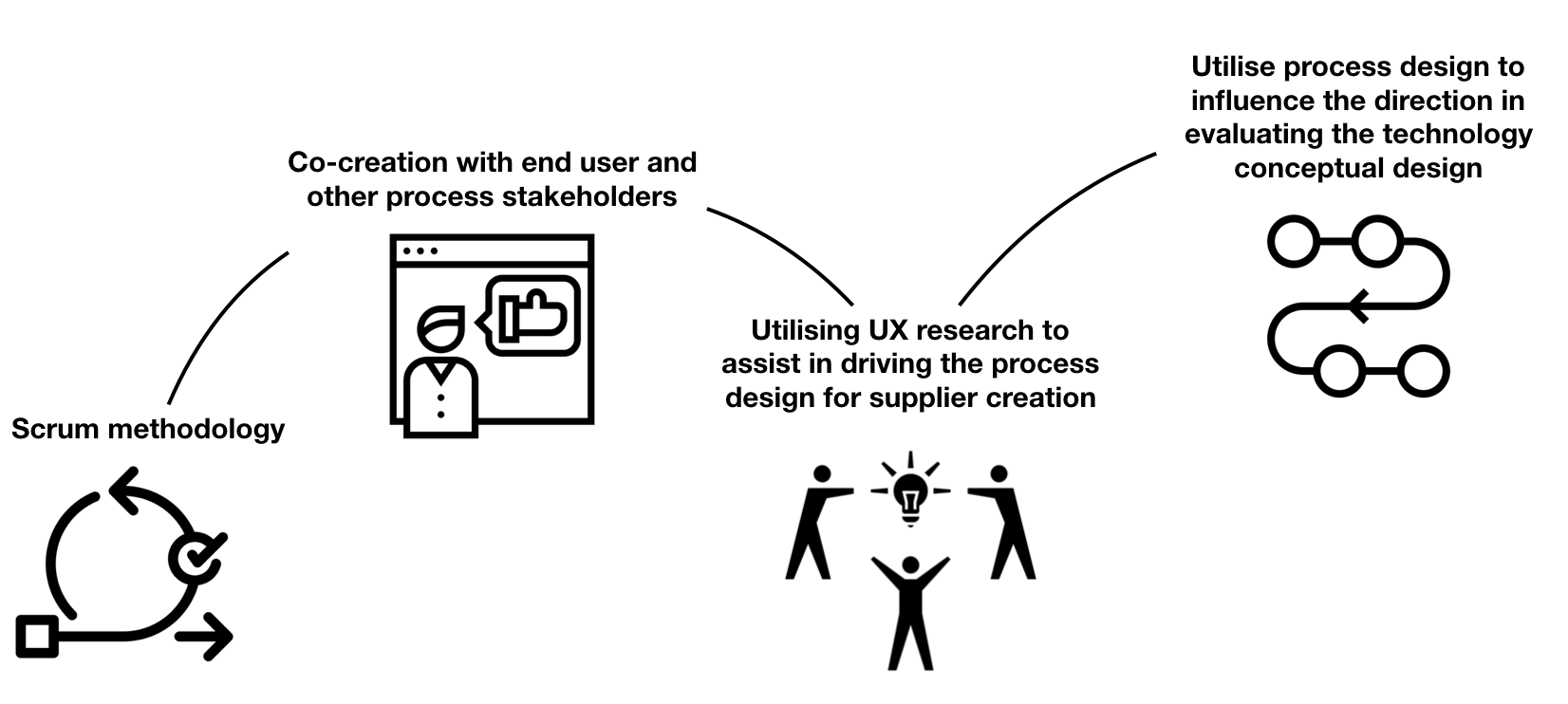
Building Our Research Foundation
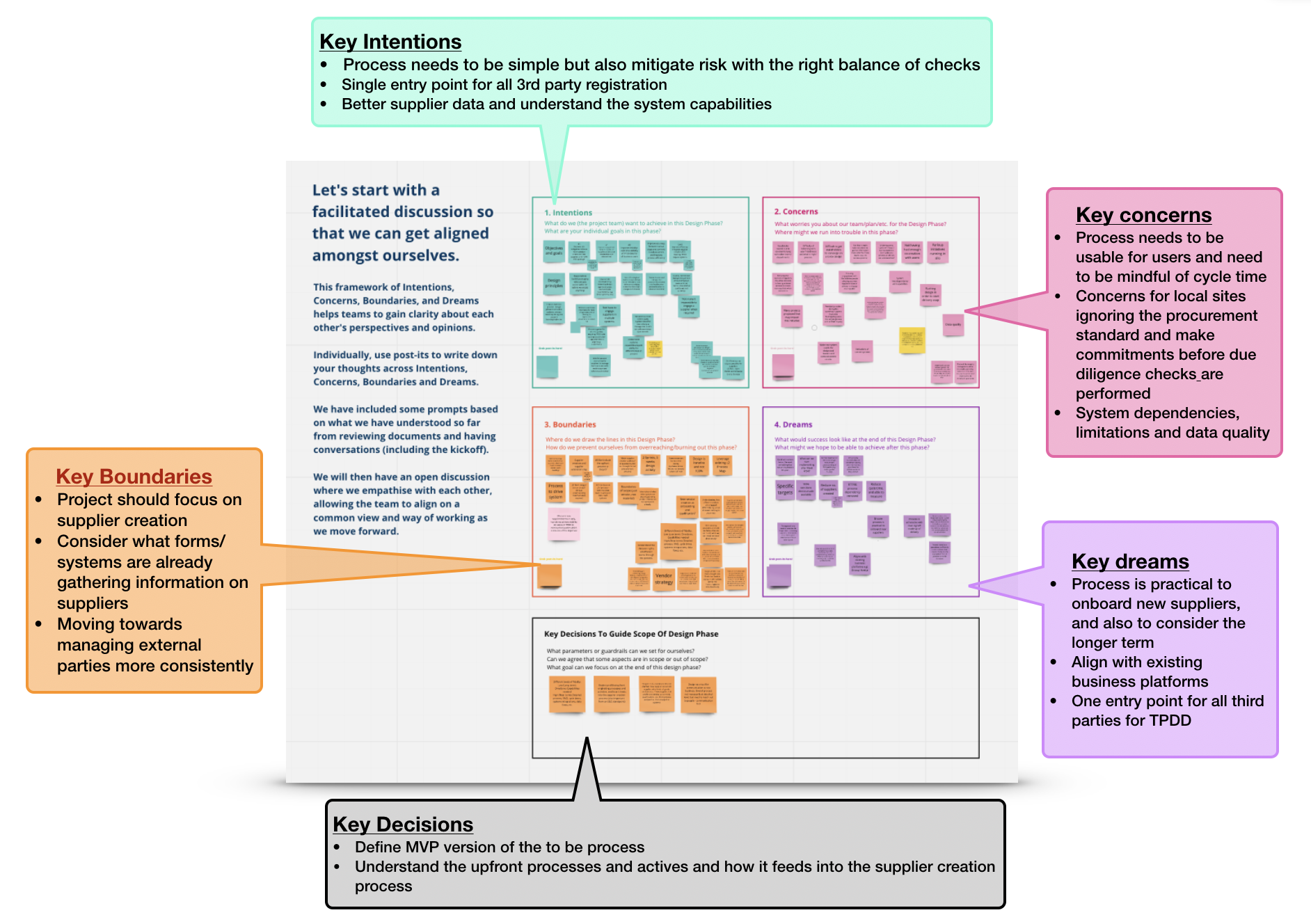
Beginning with Problem framing workshops
It was important to converge our key stakeholders to define the areas of concerns together and then allowed us to guide them into prioritising what opportunities were achievable within the 14 week project.
We utilised virtual workshops to conduct design thinking sessions.
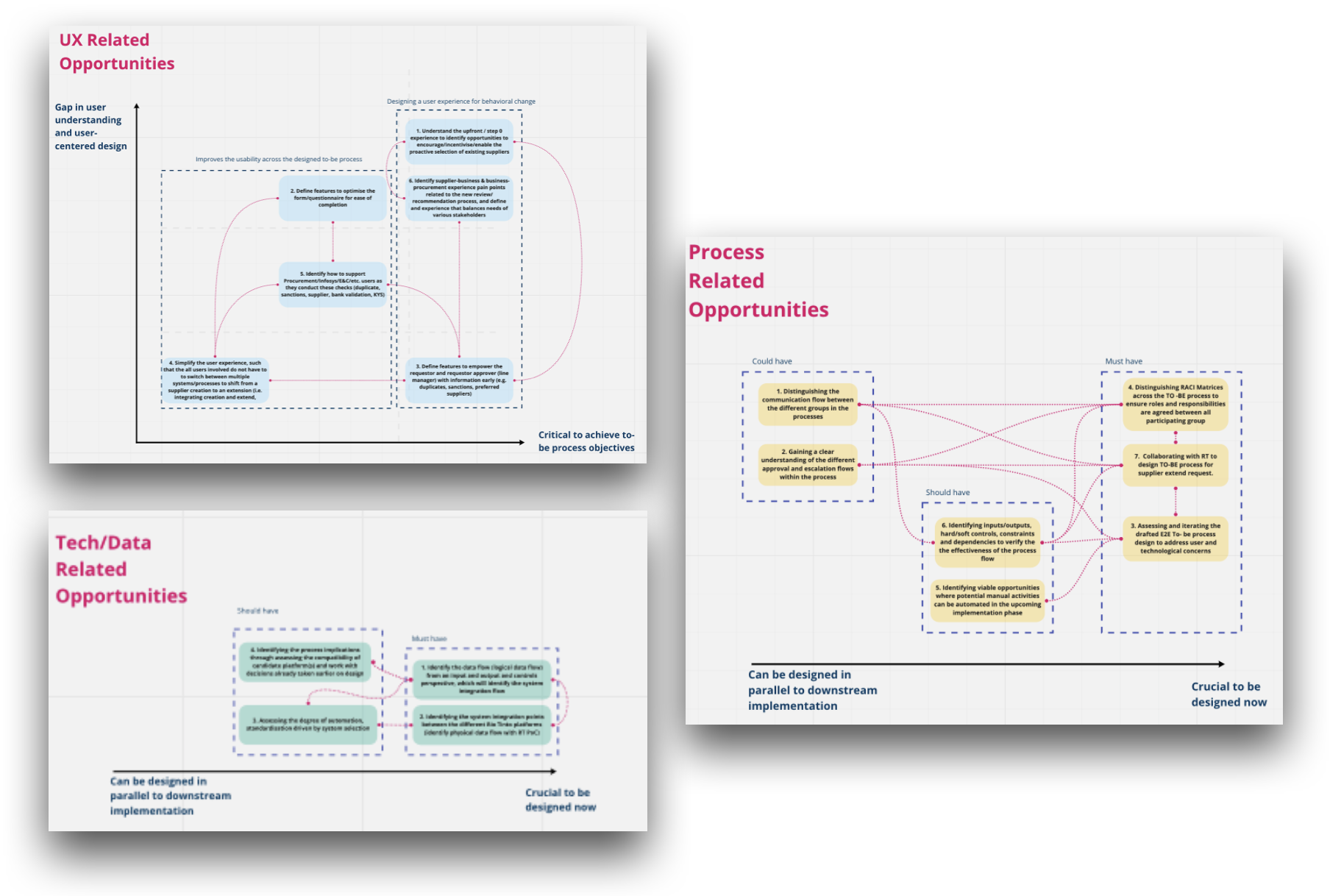
Converting our workshop findings to project opportunities
- To understand the related upfront / step 0 processes, activities, and systems at a high-level
- To understand user’s feedback and ideas related to the drafted to-be process design
- To cross-examine forms that are required to be filled across the process to identify what the must-have inputs and outputs
- To Identify system constraints and dependencies for must-have inputs and outputs, to prioritise what is feasible in the MVP to-be process
Aligning the 1st Draft of Process Design with Our Initial Insights
Initially, our client decided to put their initial vision of the future state of supplier creation into a process map.
As we were comparing the process design of supplier creation with what we have learnt from the workshops, we identified key questions that we wanted to further explore during the user interviews.

Conducting User Interviews
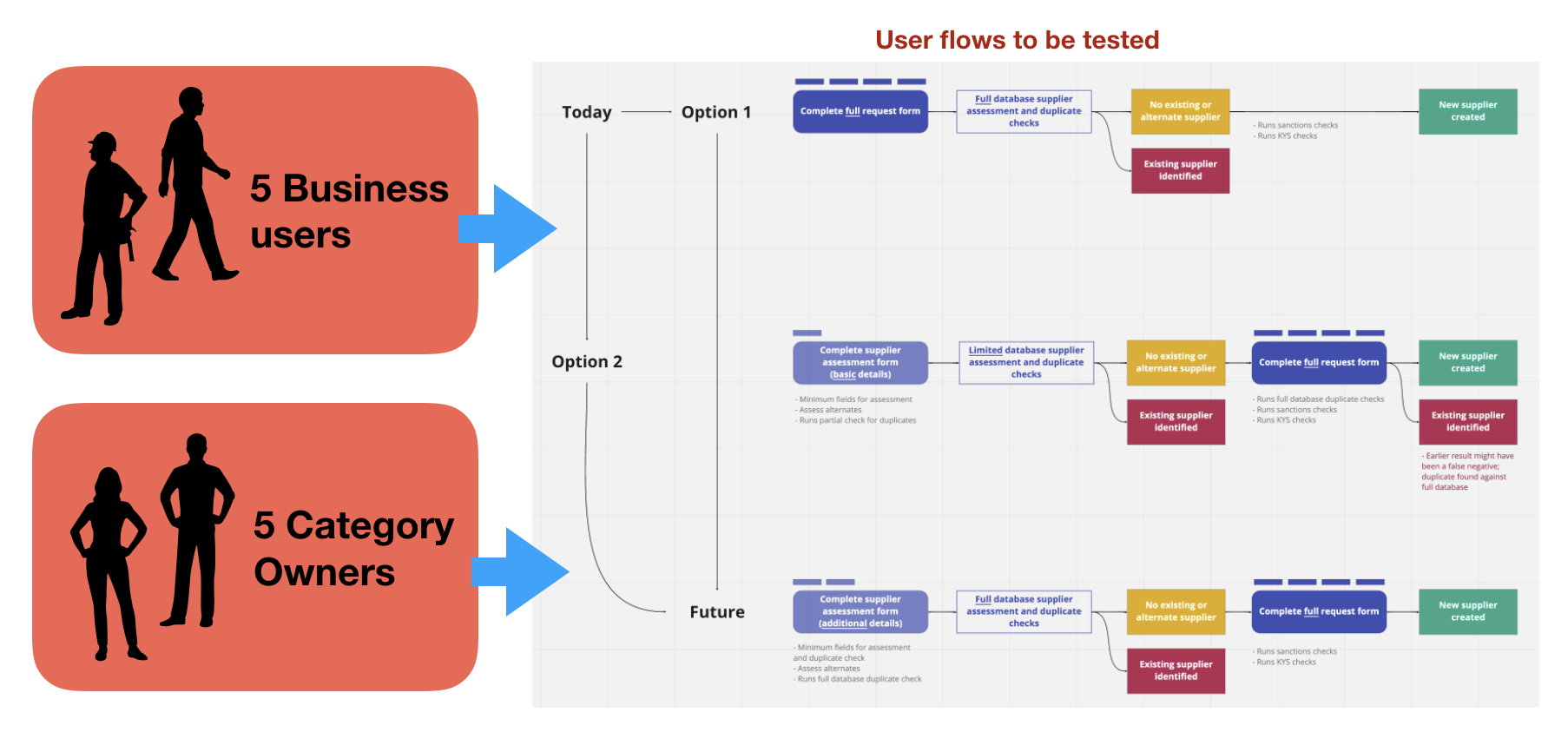
Testing potential user flows with users
We plotted 3 potential user flows, which were derived by the existing draft of the future supplier creation process. These flows were to be tested with 2 main user groups, which were the business users and category owners.
We wanted to test different ways of understanding:
- The most efficient and effective sequence in terms of incorporating upfront data checks and risk checks in the future process
- The upfront activities (E.g. using another tool to identify whether an existing contract exist for that particular good/service that the user is interested in purchasing from the new suppliers) that they will be needed to complete prior filling in the form to onboard a new supplier
- Their expectations of the new onboarding process
Synthesising interview responses to pain points
Pain point #1
Upfront checks (Step 0) prior to supplier creation form may not be as efficient and effective to control vendor proliferation
Pain point #2:
Upfront checks via supplier assessment form is not desirable for users (requestors and approvers)
Pain point #3
There are different pathways into entering the supplier creation process. Potentially, users go through unnecessary duplicate steps of what they had already done, reducing efficiency and UX
Pain point #4
Users do not have the ability (information and decision making authority) to complete the process independently, where there is back and forth inefficiencies to fill information gaps
Identifying Our User Personas & Exploring Their User Journey Mapping
Prior to redesigning the future state process of supplier creation, it was essential to communicate who we believed the target users are and define them into personas for our key stakeholders. By explaining the personality traits and attributes of these users, it brought our key stakeholders closer to who we were trying to focus on to solve the inefficiency of the current process. Also, guide them to understand what solutions are the most effective for those user groups.
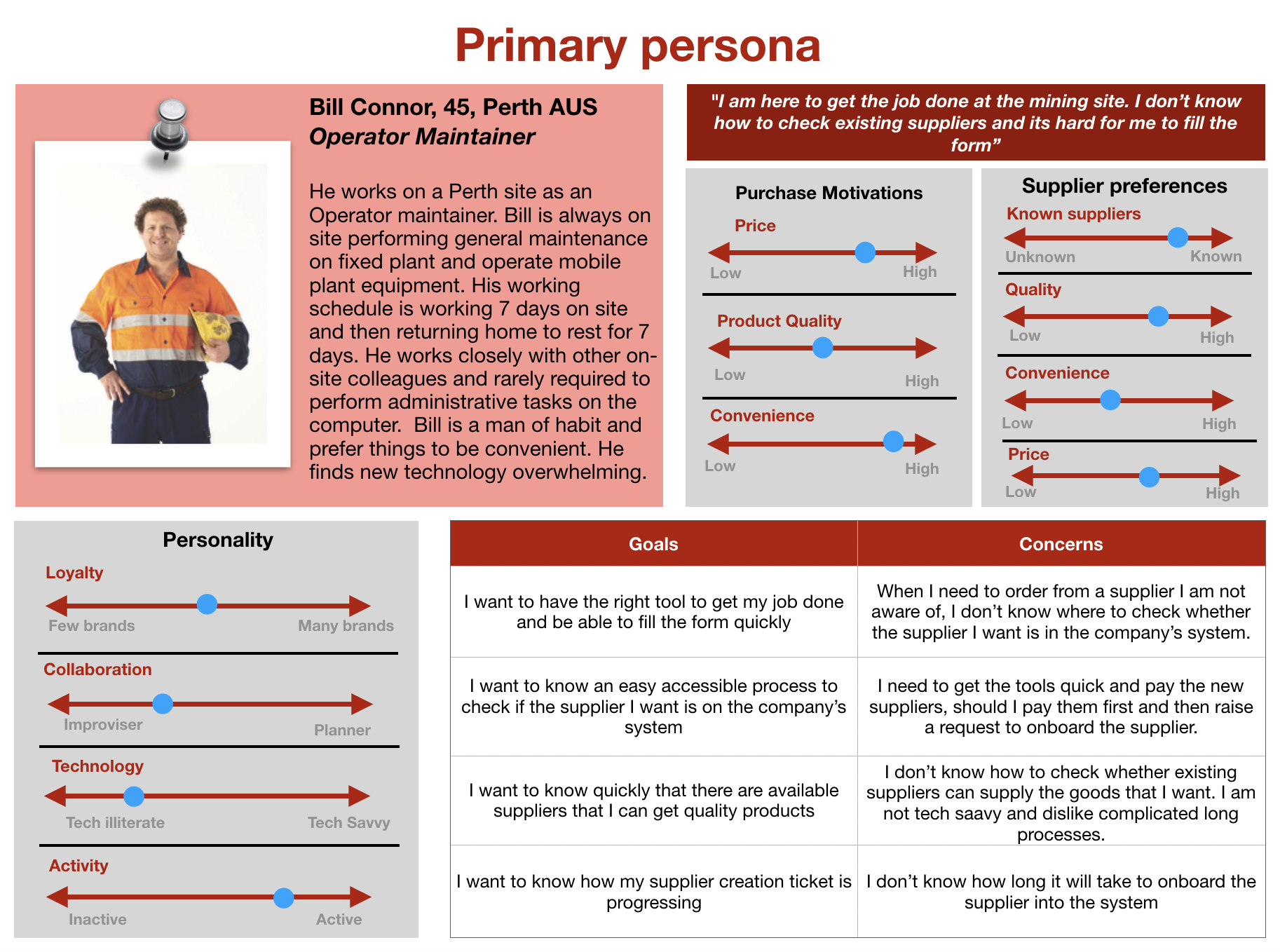
How did we come up with this primary persona?
Throughout our workshops and interviews with the business, we were well informed that site workers were the most relevant primary users to initiate a supplier creation. This was due to their frequent role of ordering equipments and tools, which was one of the major areas where the company spent the most. They were known to be knowledgable with what suppliers they wanted to use and what quality those equipments would need to reach in order for them to complete their task at hand. We were informed that site workers required the use of new equipment and tools at their convenience, where usually it might be a purchase from down the road shop than ordering from Blackwoods on their purchasing system. Therefore, it was quint-existential for them to utilise a convenient and robust process in checking whether these suppliers already exist within the company or not. But most importantly, if not, there was a need for a more user-friendly way in onboarding these new suppliers quickly and ensuring that these suppliers are paid on time.
My team and I utilised the 1st version of the process map to plot the user journey mapping. It allowed us to clearly identify:
- the user’s motivations and goals behind each of the stages for supplier creation
- the potential target state and benefits of each process stages
- the key initiatives that need to be undertaken to achieve the target state
- the pain points that are currently blocking/slowing the completion of the process stage
- the current emotional state that the user is feeling in each stage
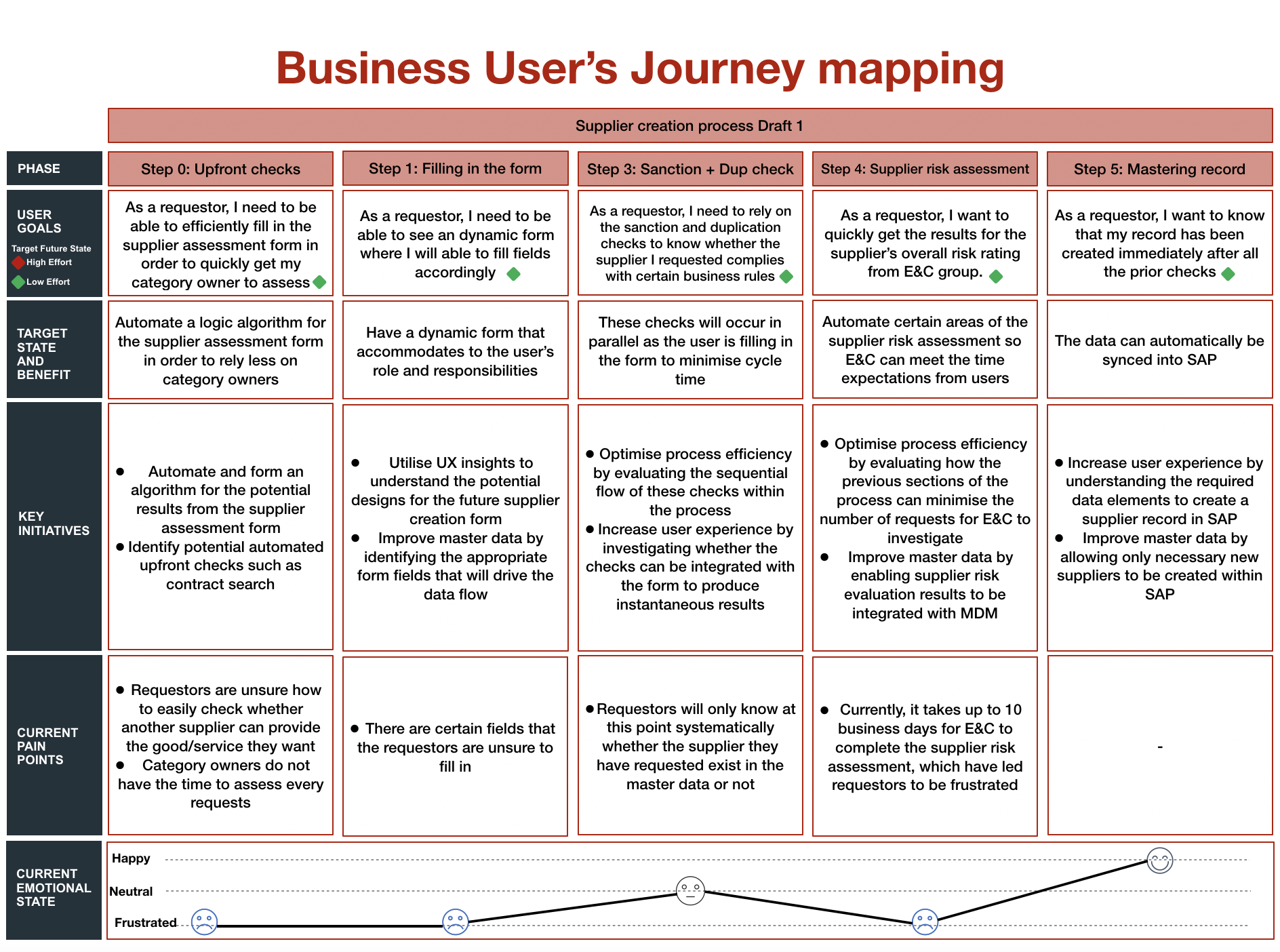
Prioritisation of Project Deliverables
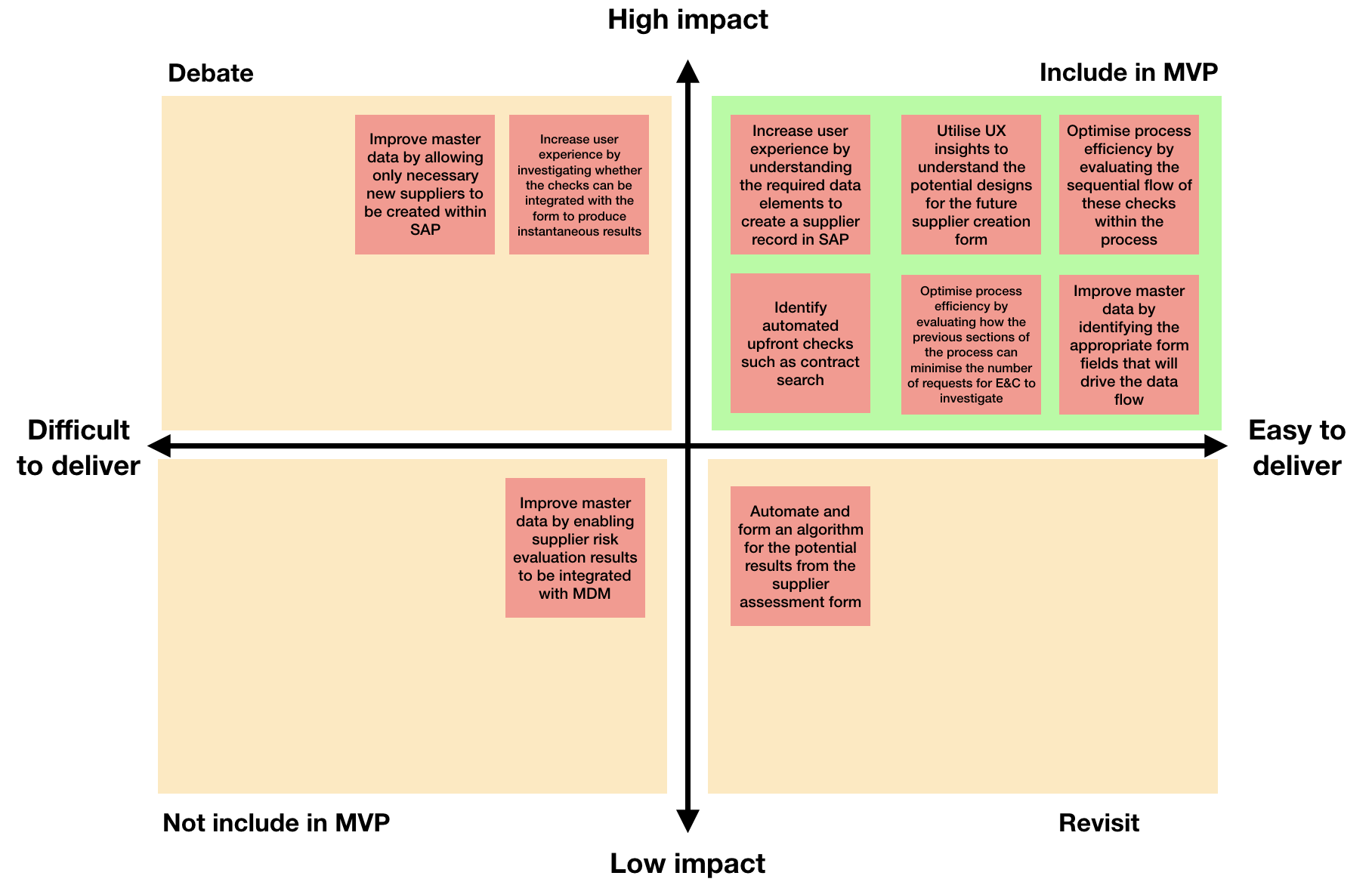
Upon presenting the personas and user journey mapping to our key stakeholders, my team and I performed an exercise via virtual white-boarding on Miro to allow and our stakeholders to agree upon which key initiatives from the user journey mapping are the most impactful and easiest to deliver for the MVP state.
Iteration & finalisation of process design
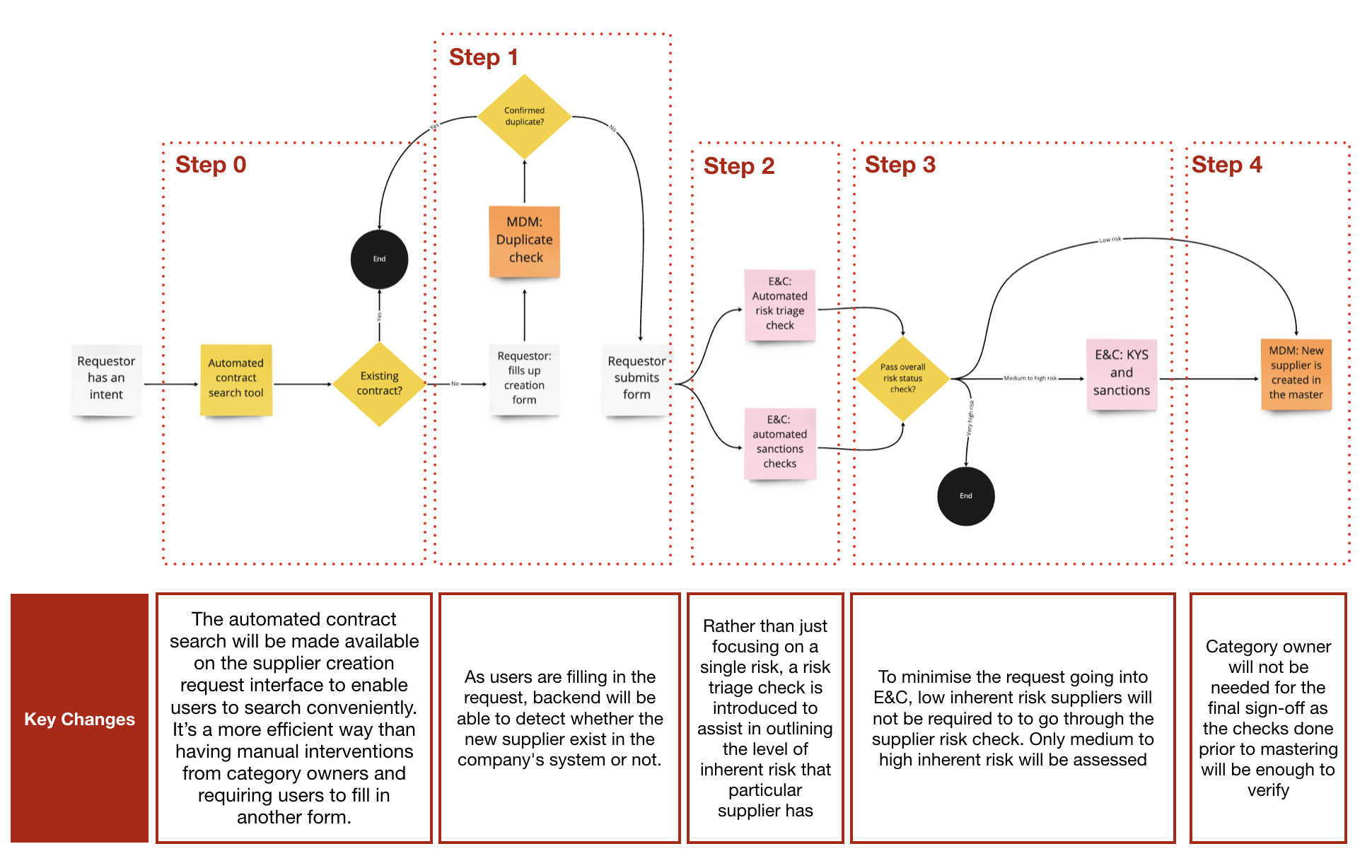
After all the insights and findings were gathered in the research phase, we were able to guide and collaborate with our stakeholders to agree on changes that were necessary for the MVP process. Below demonstrates the key changes we have designed.
Before iteration: 1st draft of the TO-BE supplier creation process
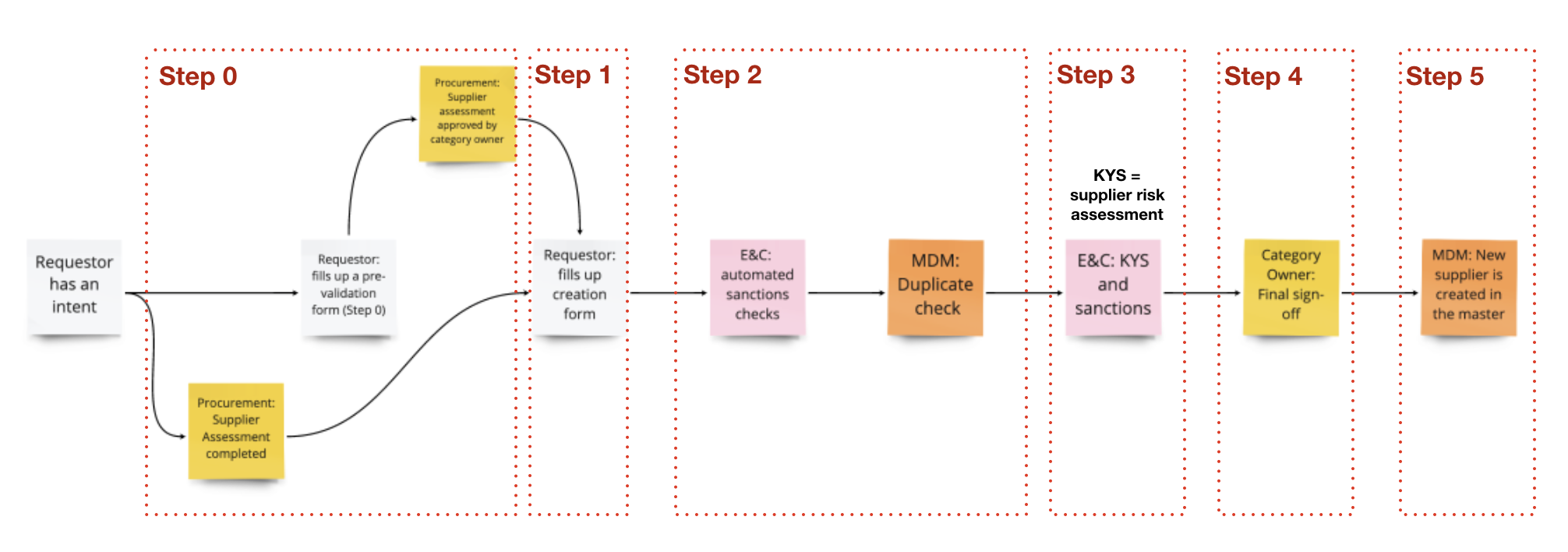
After iteration: High level version of the finalised MVP process map for supplier creation
Mapping out a detailed project roadmap
Upon finalising this project, my team and our key stakeholders collaborated together to plot out the implementation roadmap.
It was great to hear that our client was extremely happy to proceed in going to the next wave of the project and begin implementing the MVP process.
Next Steps
- Reassess the process when the system interface have been chosen
- Design an implementation roadmap for Wave 1B
- Conduct UX research on the remaining onboarding processes and then design MVP process mappings
Learnings
- As a process lead, I had to collaborate and co-design with many stakeholders with different personalities. I had to learn how to be patient with dealing with many stakeholders, rather than jumping into conclusion I always sought for clarifications as people won’t tell you exactly what they are thinking
- As there were many hats I had to wear when designing a user centric process, I became more comfortable being out of my comfort zone where I continuously seek internally and externally to assist me in delivering the best for my client